“Be a Faithful Steward of God’s Given Gifts”
Proverbs 31:10–13, 19–20, 30–31 / Psalm 127 (128) / 1 Thessalonians 5:1–6 / Matthew 25:14–30
My dear brothers and sisters,
In today’s Gospel, Jesus challenges us to use faithfully the gifts and talents God has entrusted to us. Each of us has been blessed with unique gifts and talents, yet sometimes we fail to recognize, develop, or use them meaningfully. Instead of putting these gifts at the service of God and our brothers and sisters, we often use them only for our own benefit. Jesus therefore, calls us to become faithful stewards of God’s gifts by using them generously to serve others and promote the common good.
Jesus tells us the parable of the three servants, to whom their master entrusted his property when he was going on a journey. To one, he gave five talents; to another, two; and to the third, one. Each received according to his ability. The first two servants invested their talents and gained more. But the third servant, out of fear, went away and buried his talent in the ground. When the master returned, he praised the first two servants, saying: “Well done, good and faithful servant!” My dear friends, this is what we expect to hear from Jesus at the end of our lives: “Well done, good and faithful servant!” The question we can ask here is how can we hear these words from Jesus if we refuse to use the gifts and talents God has given us? Every one of us has received a gift from God.
Some of us can sing, others can teach or lead; some are even good at encouraging others. Some have the gift of giving, while others serve quietly by caring for the sick, helping the poor, visiting the lonely, the prisoners, and praying for those in need. Not everyone has the same talent. But everyone of us has something to offer from what God has given us.
My dear brothers and sisters, God does not give us all the same gifts, but asks us to use faithfully the different gifts He has given each of us (cf. Rom 12:6). While some may serve through giving material support, others can offer encouragement, visit the sick, or pray for those who suffer. What matters is not the size of our gifts but our commitment and willingness to use them in serving others. Unfortunately, we sometimes fail to use our talents because of fear, laziness, disobedience, self-interest, or constant comparison with others. Instead of appreciating and developing our own gifts, we waste time admiring what others have. We must recognize our gifts or allow others to help us discover them through various responsibilities they assign us which eventually will help us put them at the service of God and our brothers and sisters.
In religious life for instance, each of us has something valuable to offer. We can welcome others into our communities, encourage those who struggle, assist families in need, and guide young people in faith. Even small acts, when done generously and with love, can make a great difference. Consider the image of a water pipe. We are like pipes through which water flows to reach people. When the tap is open, the water flows through the pipe and serves its purpose by meeting people’s needs. But when the tap is closed, the water remains stagnant inside the pipe. Over time, the pipe may rust, and the water may become contaminated and unfit for use. The same is true of our gifts. When we fail to use them, they cannot serve others or fulfil their intended purpose. Just as a pipe is meant to allow water to flow, our gifts are meant to flow through us to bless and benefit others. Our gifts are not meant to be stored up but to be put to use for the good of others.
Therefore, drawing inspiration from the first and second readings, we are reminded of the qualities of a virtuous woman who is hardworking, generous to the poor, and faithful in carrying out her responsibilities. These readings teach us that true greatness is not found merely in physical beauty, wealth, or social status, but in a life of service, generosity, and reverence for the Lord. Similarly, St Paul’s First Letter to the Thessalonians urges us to remain sober, vigilant, and steadfast in faith, for the day of the Lord will come unexpectedly.
These readings call us to embrace diligence and generosity and to remain alert as children of the light (cf. 1 Thess. 5:6-8). Rather than becoming passive in our Christian lives, we are encouraged to grow actively in faith, do what is good, and use the gifts God has entrusted to us to serve Him and our neighbours. We do not need to be the best to make a difference; we only need to be willing to serve the people entrusted to us.
As Christians, we must guard against greed and an excessive attachment to worldly possessions and pleasures. Instead, we should use our time, talents, and resources wisely, care for the needy, fulfil our duties diligently, and remain spiritually alert through prayer and good works. Although we do not know the day or hour when the Lord will come (cf. Mtt 24:36), we can prepare ourselves (cf. Mt 24:42) by living each day in faith, love, and obedience to His will (cf. Jn 14:15).
Therefore, let us not postpone the good we can do today. Let us reach out to the poor, support those in need, carry out our responsibilities faithfully, and walk daily in the light of Christ. In this way, whenever the Lord comes, He will find us living as faithful and loving servants, ready to welcome Him with hearts prepared for His coming.
My dear brothers and sisters, let us reflect on whether we are using our God-given talents faithfully to serve God and our neighbours. One day, we will give an account to the Lord, who will judge us not by comparing our gifts with those of others, but by how faithfully we used what He entrusted to us.
Therefore, let us stop comparing ourselves with others, making excuses, or burying our talents. Instead, let us use our gifts generously in our parishes, communities, and Society for the glory of God and the good of His people. As we approach the end of the Church’s liturgical year, let us remain faithful, vigilant, and ready to meet the Lord, so that we may one day hear Him say, “Well done, good and faithful servant. Enter into the joy of your master” (cf. Mt 25:14-25).
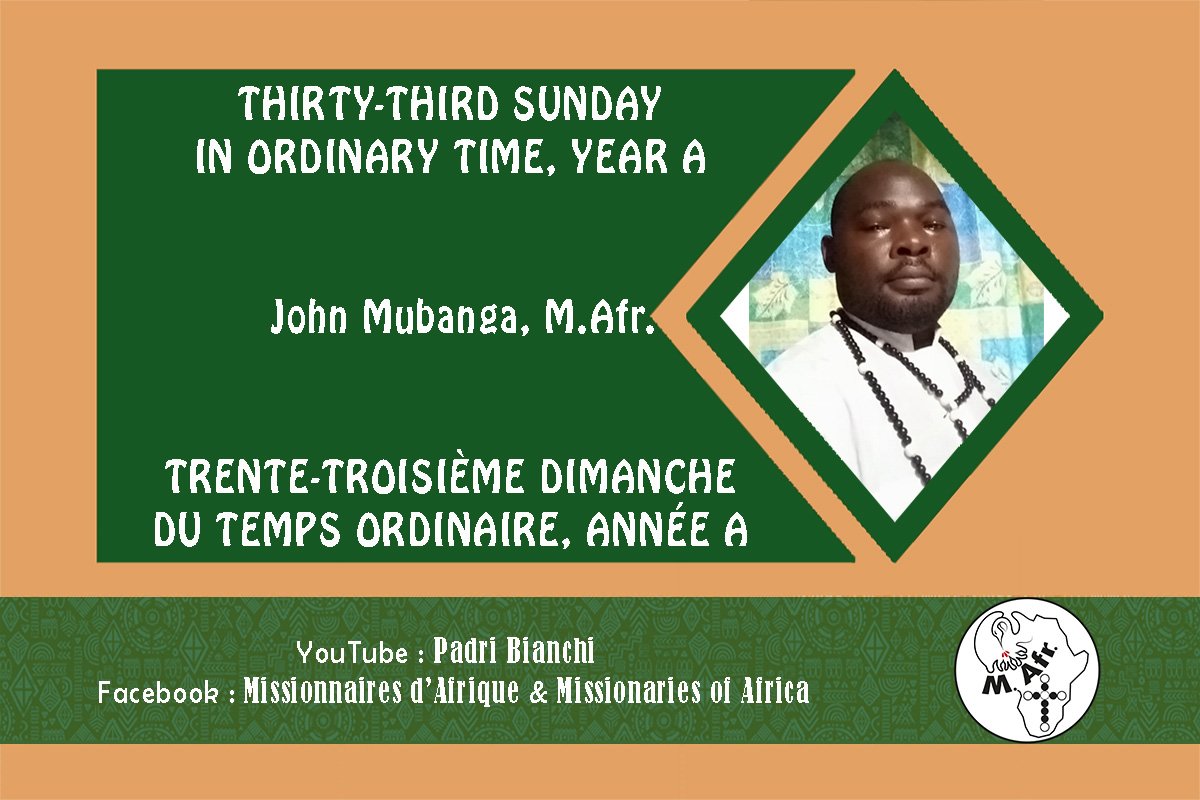
By: John Mubanga, M.Afr.