
Brief History and Current Administration of the Archdiocese of Mwanza
Christianity first reached the shores of Lake Victoria in Tanzania through the Missionaries of Africa, whose vision was to bring the Gospel to the African world. Their arrival marked the beginning of a new spiritual chapter for the people of Mwanza and the wider lake region. Over time, the mission grew in strength and influence, and on March 25, 1953, the Vicariate of Mwanza was officially elevated to the status of a Diocese. This recognition reflected the growing Catholic community and its importance in the region.
Years later, following the resignation of Bishop Renatus Butibubage, the Diocese of Mwanza was further elevated to an Archdiocese on November 18, 1987. This transition signified not only the maturity of the local Church but also its central role in guiding the faith across the region. Since then, the Archdiocese has continued to flourish under the leadership of successive archbishops, and today it is shepherded by Archbishop Nkwande, who oversees its pastoral and administrative mission.
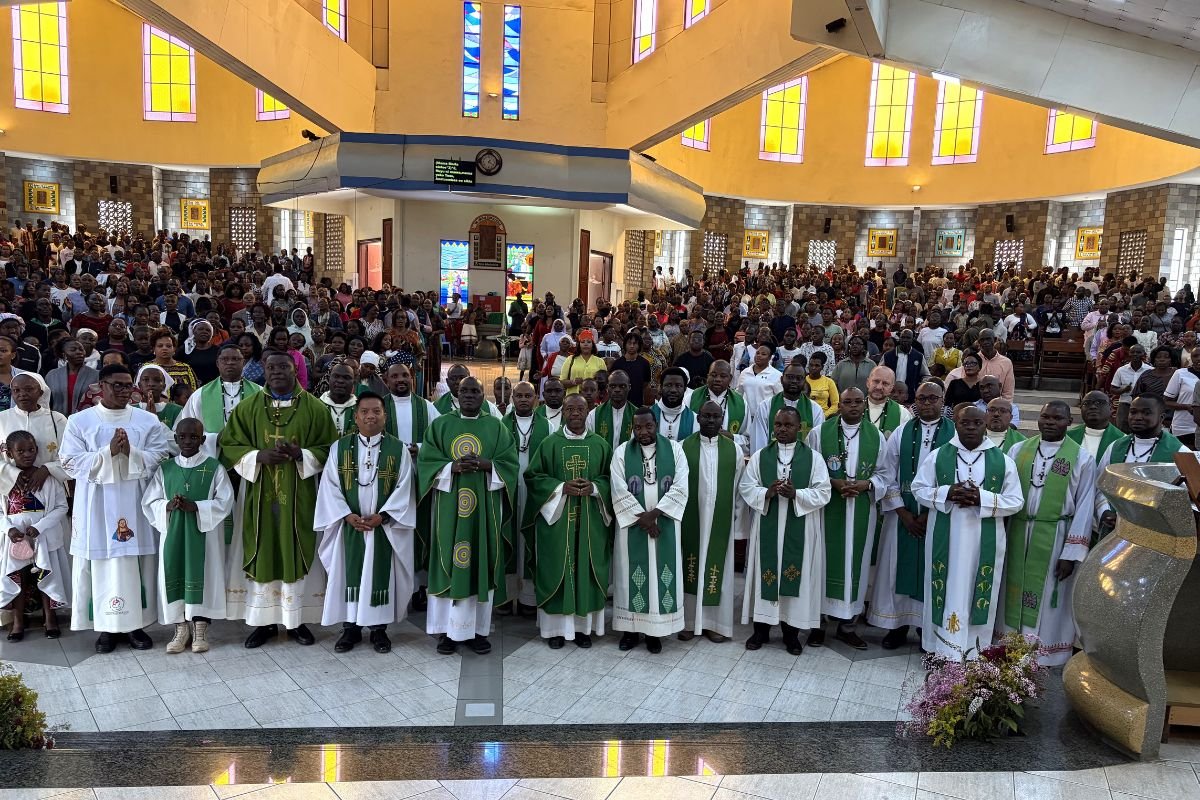
By 2025, the Archdiocese of Mwanza had grown into a vibrant ecclesiastical territory, structured into 11 deaneries that encompass 63 parishes, 26 quasi-parishes, 2 chaplaincies, and 34 institutions. To support this vast mission, the Archdiocese operates through a Secretariat composed of four directorates, each grouping several departments that manage pastoral care, administration, education, and social services.
Missionary Context of the Archdiocese of Mwanza
The Church as Family of God in Mwanza is called not only to proclaim the Gospel but also to respond to the demands of human and pastoral development. Confronted with social, economic, and spiritual realities, the Archdiocese embraces the principle of self-reliance as an essential orientation to ensure the continuity and effectiveness of its mission.
This shows that evangelisation must be accompanied by material, financial, and organizational means necessary to sustain pastoral, social, and missionary activities. Through the active participation of the faithful, proper management of resources, and economic initiatives adapted to the local context, the Archdiocese strengthens its autonomy, supports pastoral and charitable works, and fosters the integral development of the Christian community. It also encourages responsibility, solidarity, and community participation, ensuring that each believer contributes to both the spiritual and material growth of the Church.
Pastoral Experiences and Fundraising in Nyakato Parish
In Nyakato Parish, pastoral work is closely linked with the life of small Christian communities, lay associations, and families. These groups form the foundation of evangelization, prayer, and mutual support. We respond to the spiritual needs of the faithful through catechesis, liturgy, and community outreach.
At the same time, sustaining the parish and contributing to the wider mission of the Archdiocese requires significant financial effort. Contributions come through offertories during Mass, tithes, donations for church construction, and support for priests, seminarians, and religious activities. To achieve these goals, fundraising activities known as Harambee are organized at three levels:
- Small Christian communities mobilize regular contributions.
- Families provide household-level support for parish projects.
- The parish as a whole organizes larger events and campaigns aligned with the Archdiocese’s strategic plan.
Economic Context in Mwanza
The people of Mwanza are engaged in diverse economic activities including manufacturing, retail, transport, fishing, livestock, natural resources, tourism, beekeeping, minerals, and agriculture. This diversity provides opportunities for community contributions to Church development, making fundraising a vital tool for both spiritual and social growth.
Benefits of Fundraising for the Archdiocese of Mwanza
Fundraising in Mwanza is not just about money. It is also about building a stronger faith community, improving social services, and ensuring the long-term sustainability of the Archdiocese’s mission.
- Infrastructure Development: Building and maintaining churches, priests’ houses, schools, and dispensaries.
- Education and Formation: Supporting seminarians and strengthening catechism in schools.
- Healthcare and Welfare: Providing medical services and ensuring the wellbeing of Church personnel.
- Community Empowerment: Strengthening unity and solidarity among parishioners.
- Sustainability of Mission: Ensuring the Church can meet ongoing needs and respond to emergencies.
Challenges
Despite its benefits, fundraising presents challenges. At times, tension arises between financial efforts and pastoral ministry. When priests devote excessive energy to collecting money and building infrastructure, the quality of spiritual care can suffer. Sacraments, catechesis, education, and health services risk being neglected when fundraising dominates pastoral priorities.
Moreover, repeated collections can burden the faithful, leading to frustration and complaints. Over time, this financial pressure may discourage participation, and some believers may even withdraw from the Church out of fear of not being able to contribute adequately. Balancing material needs with spiritual responsibilities is therefore essential.
Proposals of Solutions in the Deanery of Nyakato and Nyakato Parish
In Nyakato Deanery, these challenges are openly discussed in meetings. We are encouraged to ensure that financial efforts do not overshadow the spiritual nourishment of the faithful. Why are some Christians complaining? Do we have continuous financial reports?
At Nyakato Parish, several concrete solutions have been adopted:
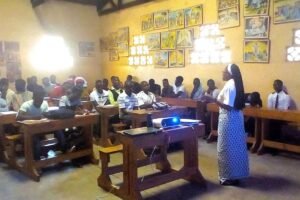
During family visits, we insist on the importance of contributing to the Church activities. We will no longer wait for help only from elsewhere to build our local Church. We also give clear reports to Christians on how the funds received are being used for Church’s work. We insist on strengthening sacramental life: Within two years, many couples received the blessing of marriage. We focus on adult catechesis and baptism by giving intensive seminars that lead to the baptism of many adults. By visiting the Small Christian Communities, confreres and Church leaders encourage our parishioners to an active participation in Church activities. We give Special attention to Christians who face challenges in their faith.
This balanced approach ensures that, while fundraising remains necessary to meet parish and diocesan needs, the primary mission of the Church in its spiritual care, evangelization, and pastoral accompaniment remains at the centre.
By: Sambari Sanou, M.Afr.