
What comes to my mind when I hear of synodality, is an echo of the phrase from the Synod of the Archdiocese of Liverpool 2018 -2020; Together on the Road: Becoming the Church we are called to be. This captures my basic understanding of synodality. Since Pope Francis stated in 2018 that synodality allows hope to flourish, there has been an increasing interest in the link between synodality and hope. This article is a reflection on my experience of synodality and hope. According to St Augustine, as paraphrased by Michael Lamb, hope is a kind of love for a future good that is desirable and possible to attain, but not yet present or attained (2018). Lamb further says that the desired future good is essentially communal and a common good (ibid). Synodality and hope, as indicated above, have major common elements such as a relational aspect and an orientation to the future. As for the actual functioning of synodality, I find it useful to stay reminded that synodality is not an end in itself but a means of carrying out the mission of Christ as stated in the Final Document of the Synod (FDS) 32. While it is important to understand what synodality is, in my grassroots involvement I have paid more attention to the practice and process side of synodality than to any in-depth exploration of the concept.
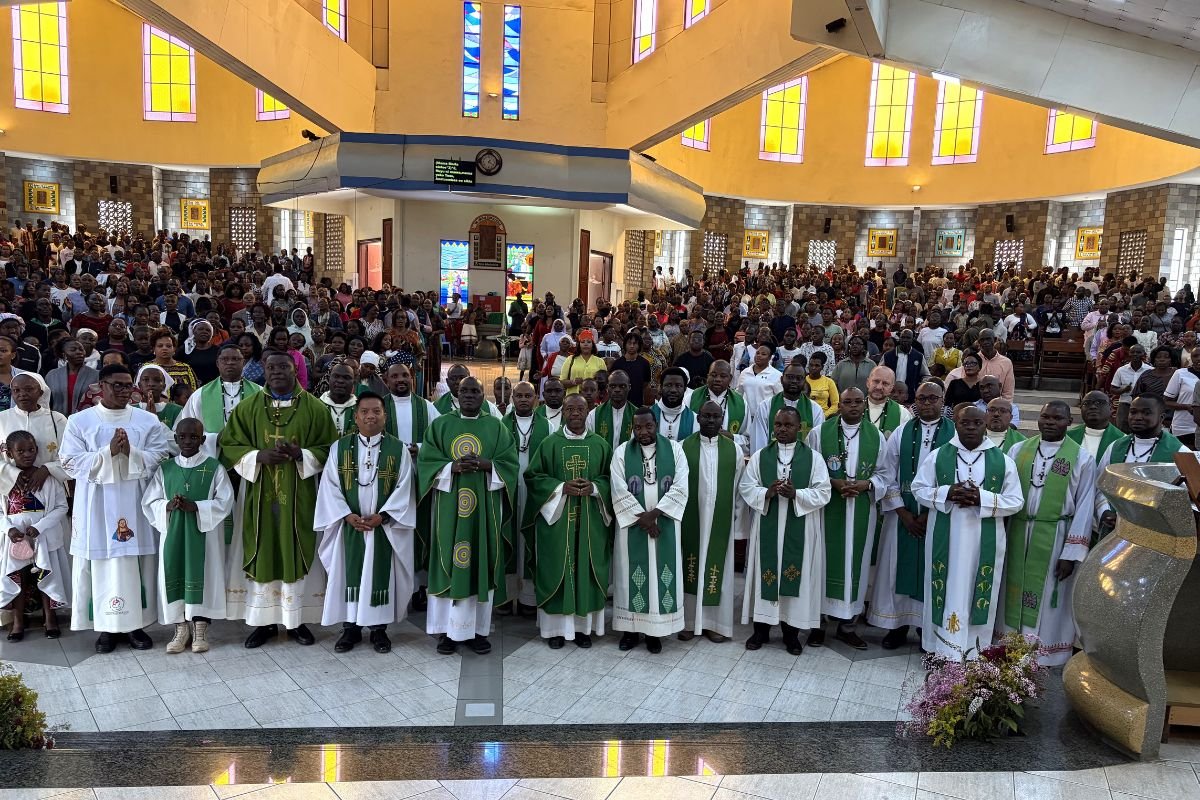
My appointment in 2018 to St Vincent de Paul Parish in the Archdiocese of Liverpool for ministry that included work with migrants and asylum seekers, coincided with the local Archdiocesan Synod. The subsequent Synod on Synodality for the Universal Church in 2021-2024 enlarged and enriched our local Synod. I have come to appreciate synodality as a way of being and acting in the contemporary contexts of mission. I agree with Pope Francis that synodality enables hope to flourish for I can attest to that from the grassroots experiences I have had.
Synodality And the Emergency of Hope
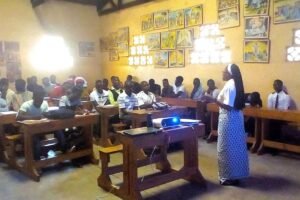
Hope emerges through listening to voices. At the consultation level I participated in listening exercises with different parish groups. We used questions such as; What is going well in our parish? What is our (my) most valuable contribution to our parish? What can we do to make our parish better? Among the groups we listened to were children at our local school. In response to what they desired our parish church to be, they came up with suggestions such as a comfy church (their word for comfort), a repainted church, a church that offers tea and biscuits after Mass etc. Listening to children was for me a reminder that synodality is also about listening to voices emerging from the margins. The attitude and skill that I appreciated were the listening that starts from a point of strength, primarily by acknowledging the presence of the Spirit at work in everyone.
Hope emerges through making room for tensions and conflicts. The Archdiocese of Liverpool has many buildings, smaller congregations and a diminishing number of local priests. In this context “maintenance” of the status quo is not an option. One of the subjects that generates tension concerns the closure and merging of parishes or structuring them into clusters called family of parishes. It is understandable that this causes tensions and even conflicts. For how does one let go of a physical church or territory, that holds dear memories? In little measures, we have noticed progress in our family of parishes as we start to focus more on developing strategies and vision that take us beyond what the FDS considers as a static notion of space embedded in geographical territory or the parish church buildings (111). I have drawn to the importance of paying attention to the movement of the spirit in the tensons and conflicts that the synodal processes easily bring up.
Is Synodality a Sign of Hope for the Church?
It is increasingly said that synodality is a sign of hope for the Church. But perhaps it is more realistic to say that synodality has the potential to be a sign of the future for the church. For synodality to be a sign for the anticipated future depends primarily on the work of the Spirit (therefore gift), but it has to be emphasized that it depends also on our decisions and actions that enable the creative interaction of the religious and spiritual resources of the Church, with the contemporary complex challenges within and outside the church. The resources meant here are the structures, processes, programs, practice of ecclesial discernment, beliefs and values as indicated in the FDS, 30, & 81.
Intersection of synodality, parish discernment and contextual challenges. In the past few months, we listened to one another concerning the rising cost of repairs of our one toilet for use in the church. It is used at most once a week when we receive nearly two hundred people (mainly asylum seekers) who come for food parcels, clothes, shoes, kitchen wear, warm drinks and snacks. We also discussed the increased wear and tear on the sanctuary carpet as our Church is used for prayer by both the Ethiopian/Eritrean Orthodox Churches. Our conversations concerning the toilet and the carpet brought us to broader matters such the material cost of hospitality for host parishes, sensitivity to the interests and values of the hosts as they seek to welcome migrants and asylum seekers. These, at times tense conversations, emerged as a space where synodality, the needs of asylum seekers/migrants and communal discernment intersected.
Intersection of synodality, charism and contextual challenges. If synodality is a sign of hope for the Church as explained above, it can similarly be so for our M.Afr. Society on condition that it intersects with both our charism and with emerging complex challenges within our Society and beyond. Our charism is hereby understood as consisting of religious and spiritual resources including interreligious dialogue, ecumenism, building communion (unity) in diversities, intercultural community living, and simple lifestyle. The challenges that our charism has potential to contribute to addressing would include intergroup tensions in parishes and dioceses and in our M.Afr. communities, religious intolerance, excesses in material lifestyle, and challenges of interculturality due to migration. Living our charism through synodality in contemporary contexts is a sign of hope for us.
Christian Hope and Resistance to Synodality
Synodality invites us all to a major change and for that reason it faces resistance. While I have been overly positive in my reflection above, it would be unrealistic to assume that synodality is not problematic. How do synodality’s democracy-like processes relate to the governance and leadership of the church as we know it? Does synodality make faith leadership easier or harder? An attempt to answer such questions can expose doubts, apprehension and some weaknesses of synodality that cause resistance. How would Christian hope help me if I should be resistant to synodality? I would remind myself that if it’s the Spirit’s work it will succeed. I would also hold on to the premise that hope involves struggle to attain future goods that are difficult to attain. And lastly, I would discern the level of resistance that could be embraced as an inevitable part of the process not to be discouraged.
By: Charles Obanya, M.Afr.