Integral Ecology and Mission
The question that immediately comes to mind when reflecting on Pope Francis’s concept of integral ecology is this: Is it still necessary to discuss our environment and to remind ourselves of the urgent need to protect it? Indeed, the Church, through her high-ranking leaders (popes, bishops, etc.), has spent countless hours and sacrificed sleep to speak about creation and its dignity, thereby urging Christian faithful and all people of good will to respect it fully. Given what is happening in certain areas, this call has fallen on stony ground and has not borne fruit (Luke 8:6).
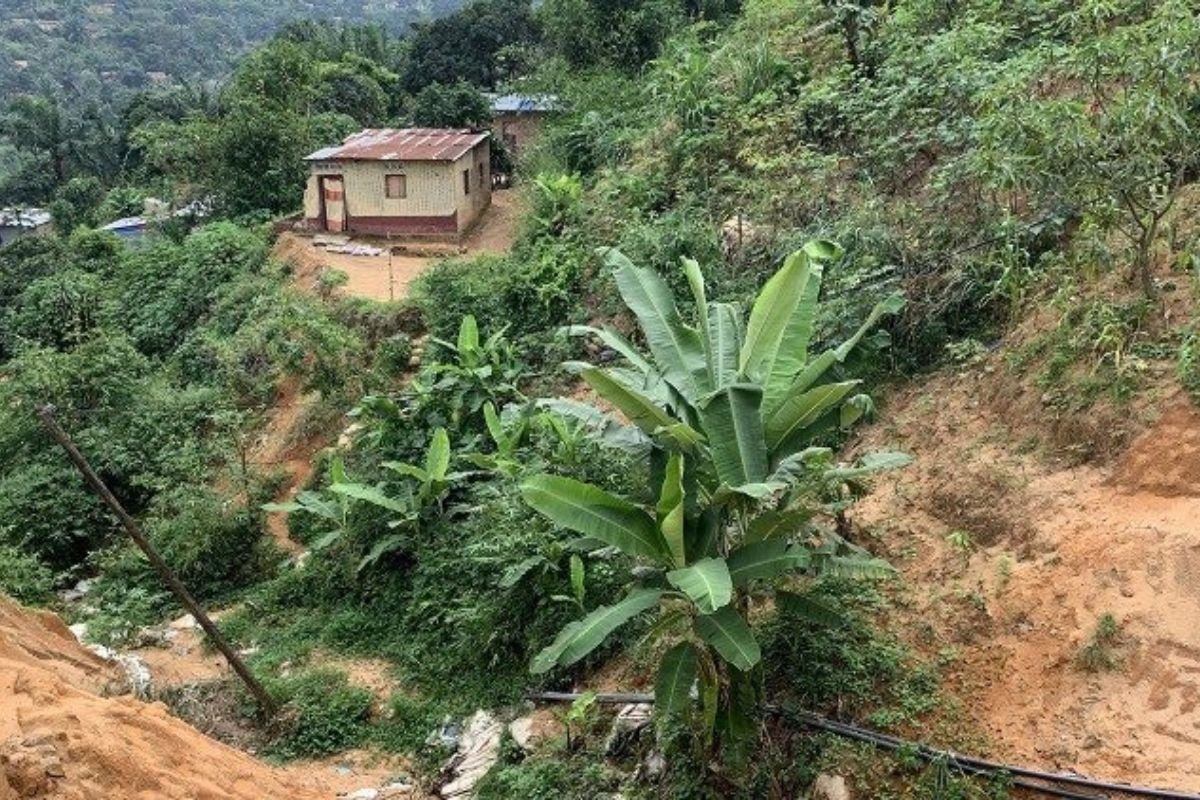
Since we are not familiar with the reality in certain areas, and for the sake of credibility, our reflection will focus on our mission area, the commune of Kisenso in Kinshasa. Kisenso is easily identified by problems such as insecurity, famine, erosion, unsanitary conditions, and water scarcity. Today, we focus on one of these problems: unsanitary conditions that pollute and destroy our environment. A large number of people accuse the government of doing nothing for the commune; however, it is appropriate to ask ourselves: what have we, as a population, done to remedy the situation? Some problems are beyond our control. However, the filth in Kisenso is a problem we have brought upon ourselves by sitting comfortably in it.
Christian teaching
The Book of Genesis (Genesis 1:29-30; 2:15) teaches us about our responsibility towards the environment. This teaching is less effective in Kisenso: what have we done to our common home? Given our context and, in the light of Pope Francis’ encyclical, Laudato Si’, we want to challenge ourselves once again on our role as Christians towards creation and, as Missionaries of Africa, to draw on our charism in relation to interreligious dialogue to work for the protection of our common home.
Pope Francis, appealing to all people of good will in his encyclical Laudato Si’, emphasises the role of the Christian faithful: “I would like to offer Christians a few suggestions for an ecological spirituality grounded in the convictions of our faith, since the teachings of the Gospel have direct consequences for our way of thinking, feeling and living” (LS, 216). Christians, in the light of their faith, must come to recognise the greatness of God in creation (Saint Ignatius), the dignity of creation, and, in so doing, dare to commit themselves to protecting the environment.
The reality in Kisenso
However, the reality in Kisenso raises questions about the Gospel’s impact on Christians’ lives. Kisenso is a predominantly Christian community. Consequently, the word of God we hear during Mass and Sunday celebrations should have a positive impact on how we treat our environment. For a Christian, love of God is reflected in love and respect for God’s works, such as creation (Genesis 2:15). Christians must be role models in the way they live: loving cleanliness, avoiding uncivil behaviour, avoiding anything that pollutes nature and causes environmental damage, such as throwing plastic bags, dirty water in the streets or non-biodegradable products in the gutters. For Pope Francis, “More than in ideas or concepts as such, I am interested in how such a spirituality can motivate us to a more passionate concern for the protection of our world” (LS, 216).
For us Christians in Kisenso, protecting the environment is a testimony to the Gospel because it reflects the inner beauty of creation. The more we neglect our role, the more we reveal our inner poverty to the world. The Pope emphasises this point when he says, “The external deserts in the world are growing, because the internal deserts have become so vast” (LS, 217). Consequently, “the ecological crisis is a call to profound interior conversion,” called ‘ecological conversion’, which implies (for every Christian) allowing all the consequences of (their) encounter with Jesus Christ to flow into their relationship with the world around them (LS, 217).
We are therefore challenged and invited to “examine our lives and see how we damage God’s creation through our actions, to experience a conversion, a change of heart, avoiding evil and anything that harms our environment” (LS, 218). This necessarily deepens Christian charity. Protecting the integrity of creation is an act of charity, according to the Pope. Ecological integrity “implies gratitude and gratuitousness, that is, a recognition of the world as a gift of the Father’s love, which leads to gratuitous attitudes of renunciation and generosity. This conversion also implies a loving awareness of not being disconnected from other creatures, of forming a beautiful universal communion with other beings in the universe” (LS, 220). Christians are invited, in their actions, to always think not only of their own survival, but also of the survival of future generations. In doing so, they bear witness to an act of charity towards nature and also towards their brothers and sisters, bequeathing them a livable environment. This mission is for every Christian “a responsibility that comes from their faith” (LS 220).
Protecting nature means protecting the lives of the vulnerable and the poor
Pope Francis, quoting Pope Paul VI, emphasises that “through thoughtless exploitation of nature, [human beings] risk destroying it and becoming, in turn, its victims” (LS, 4). The sad reality is that environmental destruction hurts humanity in general, but particularly the poor. In Kisenso, our problem stems from the simple act of throwing plastic objects onto the roads and into the gutters: during the rainy season, these same bags and objects clog our gutters, preventing water from flowing and causing flooding, severe erosion, and destruction of concessions. In addition to this damage, pollution renders the soil infertile, severely impacting crop yields and, in turn, aggravating the misery of the poor.
Garbage is also a major cause of serious diseases such as malaria, dysentery, intestinal worms, etc., the main victims of these diseases being the most disadvantaged who survive on the generosity of the environment. Once again, the Church is called upon to raise awareness among the population of the importance of protecting nature and to challenge our leaders on the urgency of safeguarding creation for our very survival, and for the survival of the generation to come.
Today, as Missionaries of Africa and in line with our charism of interreligious dialogue, the protection of the environment (which is also our ‘common home’) must be a subject of reflection in our encounters with other believers, such as Muslims. Indeed, since the environment is a common good, it is the duty of all believers, without exception, to make collective commitments and take concrete action. These include: awareness-raising events organised in our places of worship by our religious leaders (imams and priests), joint clean-up campaigns to clear and unblock drains, and perhaps tree planting. These actions, linked to the protection of our common home, are in themselves evidence of good social cohesion and effective interfaith dialogue, which the Missionaries of Africa have always advocated.
And me?
I feel called upon to live interfaith dialogue in this way. At the community level, our actions are limited to our immediate surroundings. To this end, we continually invite our Christians to keep our parishes clean by dividing the weekly cleaning tasks among the various groups and movements. We also use our homilies to raise awareness among our faithful of the need to keep their living environments clean. As we say in Burkinabe slang, “it’s good, but not good enough”. Achieving joint action with other religious denominations would be a good testimony to the Christian faith and, for us, Missionaries of Africa, a good avenue for interreligious dialogue.
By: André Sawadogo, M.Afr.