Ecological issues are not just scientific, economic or political questions. They are deeply spiritual and moral. They touch on our identity as human beings, created in God’s image (Genesis 1:26-27). Our vocation as stewards of creation (Genesis 2:15). In the light of the Christian faith and in the spirit of integral ecology developed by Pope Francis in Laudato si’, the protection of our common home appears as an exigency of charity, justice and dialogue between peoples and religions.
Humankind, creature and guardian of creation
The Book of Genesis reminds us that God created the world and ‘saw that it was good’. Then he created the human person in his own image and likeness. This truth is fundamental: human beings are not outside creation, but within it. They are part of it (CCC 355-356).
Why did God create human beings? According to spiritual tradition, notably that of St Ignatius of Loyola, humans were created to know God, to love him, and to serve him. Serving God does not mean only praying, but also respecting and preserving what he created.
God entrusted the earth to humanity. But he did not give it as an absolute property. We are not owners, but stewards (Ps 24:1). A steward administers a property that does not belong to him. Thus, creation remains God’s work. We are called to preserve it, cultivate it, protect it, and not exploit it without limit.
The episode of Cain and Abel (Gen 4:9) illustrates this responsibility. When God asks, ‘Where is your brother?’, he reminds Cain that he is responsible for his brother. Cain’s response, ‘Am I my brother’s keeper?’, reveals a shirking of responsibility. Yet, yes, we are our brother’s and sister’s keeper. And since creation as a whole is a gift entrusted by God, all humans have a responsibility to protect it.
Integral ecology and Christian charity
Christian charity is the love revealed in Jesus Christ: a love that is gratuitous, universal and faithful. It consists in loving God with all one’s heart and loving one’s neighbour as oneself (Matthew 22:37-39). The golden rule, do unto others as you would have them do unto you, sums up this attitude.
Integral ecology deepens this understanding by broadening the notion of ‘neighbour’. If the earth is the place where human beings live, if it nourishes and sustains them, then caring for the earth becomes a way of loving one’s neighbour (Laudato si’, 66). Destroying the environment harms our very health, dignity and the future of others.
Everything is connected (Laudato si’, 16, 117): human life depends on water, air, soil and trees. Cutting down forests, polluting rivers, burning toxic substances, and exploiting mineral and agricultural resources are damaging to life itself.
Protecting a tree, preserving water, preventing waste, and developing a culture of sobriety: these are concrete acts of charity. Life is the most precious gift God has given us. Defending creation is to defend life.
Thus, integral ecology teaches that love of God, love of neighbour and respect for creation are inseparable. Loving one’s neighbour while destroying one’s home would be contradictory. Our common home must be protected so that human fraternity can be real.
The most vulnerable are the first victims
Environmental degradation and the excessive extraction of natural resources impact all of humanity, but particularly the poorest. The most vulnerable populations depend directly on the land for their livelihoods: agriculture, fishing, local water sources, and forests. They do not have the financial or technological means to protect themselves against pollution, climate disasters or soil depletion. They often suffer the consequences of industrial activities from which they derive no benefit.
This creates double injustice: ecological and social. Those who pollute the most are not always those who suffer the most. Ecology thus becomes a question of justice. Protecting the environment is defending the poor.
As the Gospel reminds us: ‘What does it profit someone to gain the whole world and lose his or her life?’ (Mk 8:36). The pursuit of wealth at the expense of human life and creation leads to self-destruction. By destroying the earth, we destroy ourselves.
The prophetic response of the Church
Faced with this situation, the Church is called to play a prophetic role. First, she must raise her voice to defend life and remind us that creation is a sacred gift. God saw that everything was good. Destroying creation deliberately is tantamount to despising the work of the Creator (Rom 1:20).
Second, the Church must call for ecological conversion. This is not simply a change in external behaviour, but a change in mentality: moving from a culture of domination to a culture of service, from a culture of waste to a culture of sobriety, from unlimited exploitation to responsible stewardship.
Thirdly, it must defend the poor and creation, ‘which groans’ (Rom 8:22). The prophetic mission consists in denouncing injustices, challenging those who exploit resources abusively and promoting the golden rule: not to do to others what we would not want done to ourselves (Mt 7:12).
Interreligious dialogue in the service of our common home
The protection of our common home cannot be the responsibility of only one religion. Christians, Muslims, animists and believers of other traditions all recognise, each according to their own faith, the importance of respecting creation. The Second Vatican Council, in the declaration Nostra Aetate, recognises that religions bear ‘seeds of truth’. We share the same earth that sustains and nourishes us. This truth unites us. Interreligious dialogue can become a powerful force for environmental protection.
Thus, Pope Francis, in Fratelli Tutti (271-285), calls for universal fraternity and interreligious collaboration in the service of the common good. By working together, religions can: raise awareness, promote peace and ecological justice, encourage concrete actions such as reforestation and water protection, and educate young people in a culture of respect for creation.
When religions speak with one voice to defend life, their message becomes stronger and more credible. Protecting the earth then becomes an act of universal fraternity.
Concrete implementation: pastoral and community experience
Integral ecology is not just a theory at our level; we have translated it into concrete actions, in accordance with Pope Francis’ call to develop an ‘ecology of everyday life’ (Laudato si’, 211).
Our pastoral commitment in Bobo-Dioulasso, through JPIC (Justice, Peace and Integrity of Creation), is part of the Church’s social mission (cf. Compendium of the Social Doctrine of the Church, 466-487). Integral ecology remains more than just a theory for us; it has been translated into concrete actions.
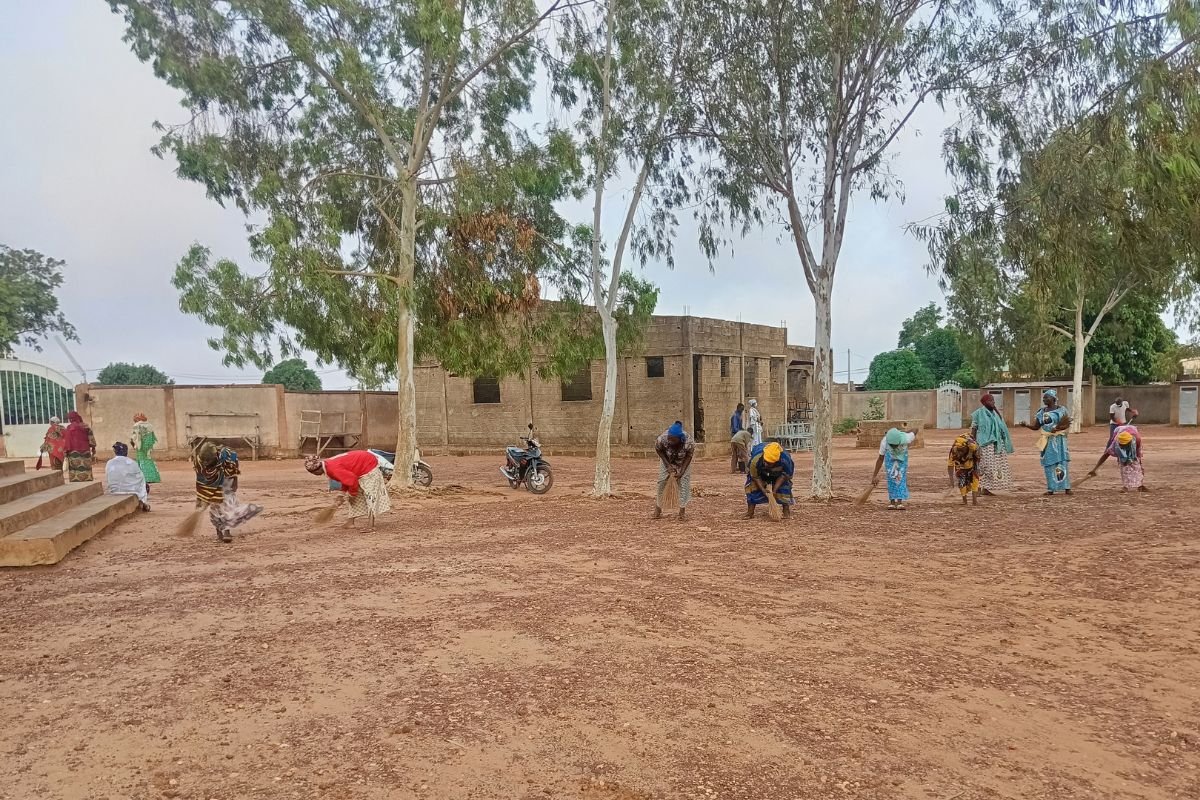
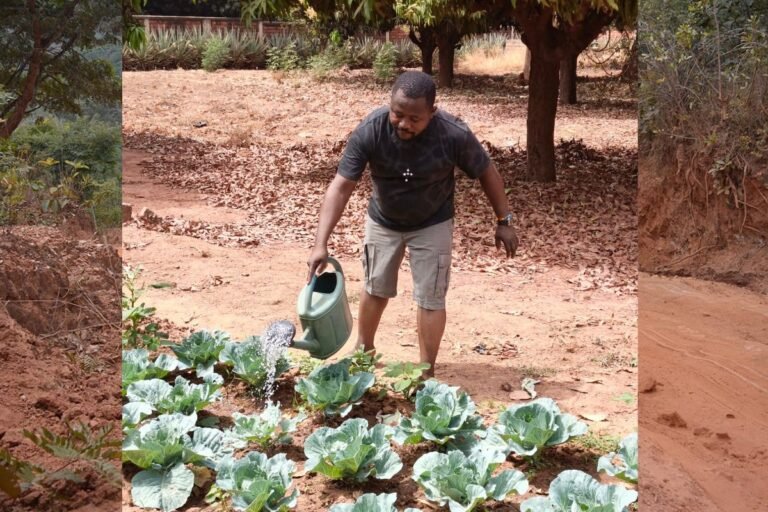
As a promoter and member of JPIC in the Bobo-Dioulasso sector, pastoral commitment has taken several forms, including: mobilising young people to plant trees and combat deforestation; raising awareness about not littering the streets and respecting the local environment; integrating environmental issues into homilies as a way to raise awareness; working with schools to teach students about environmental responsibility (Deut. 6:6-7); catechesis for catechumens to transmit a spirituality of creation; inviting parents of baptised children to give their children a plant to plant as a sign of gratitude to God and a commitment to protect life, because planting a tree can become a powerful biblical sign: the righteous person “is like a tree planted by streams of water ” (Ps 1:3). Giving a plant to a baptised child is a reminder that baptism is a new life destined to bear fruit (Jn 15:5) and that all life is a sacred gift from God (Jn 10:10). Giving a plant to a child is a way of passing on to them a responsibility and a legacy: that of caring for creation.
By: Gérard Kabongo Katanga, M. Afr.